
The Stanley Type 11 Hand Plane: A Benchmark Hand Tool.
Among the many eras of Stanley’s legendary bench planes, few inspire as much admiration and ongoing demand as the Type 11, produced between 1910 and 1918. Widely regarded as one of the finest iterations ever made, the Type 11 captures a moment in toolmaking history when industrial efficiency and traditional craftsmanship overlapped to create something truly exceptional. For woodworkers, restorers, and collectors, this model represents a near-perfect balance of usability, durability, and historical charm.
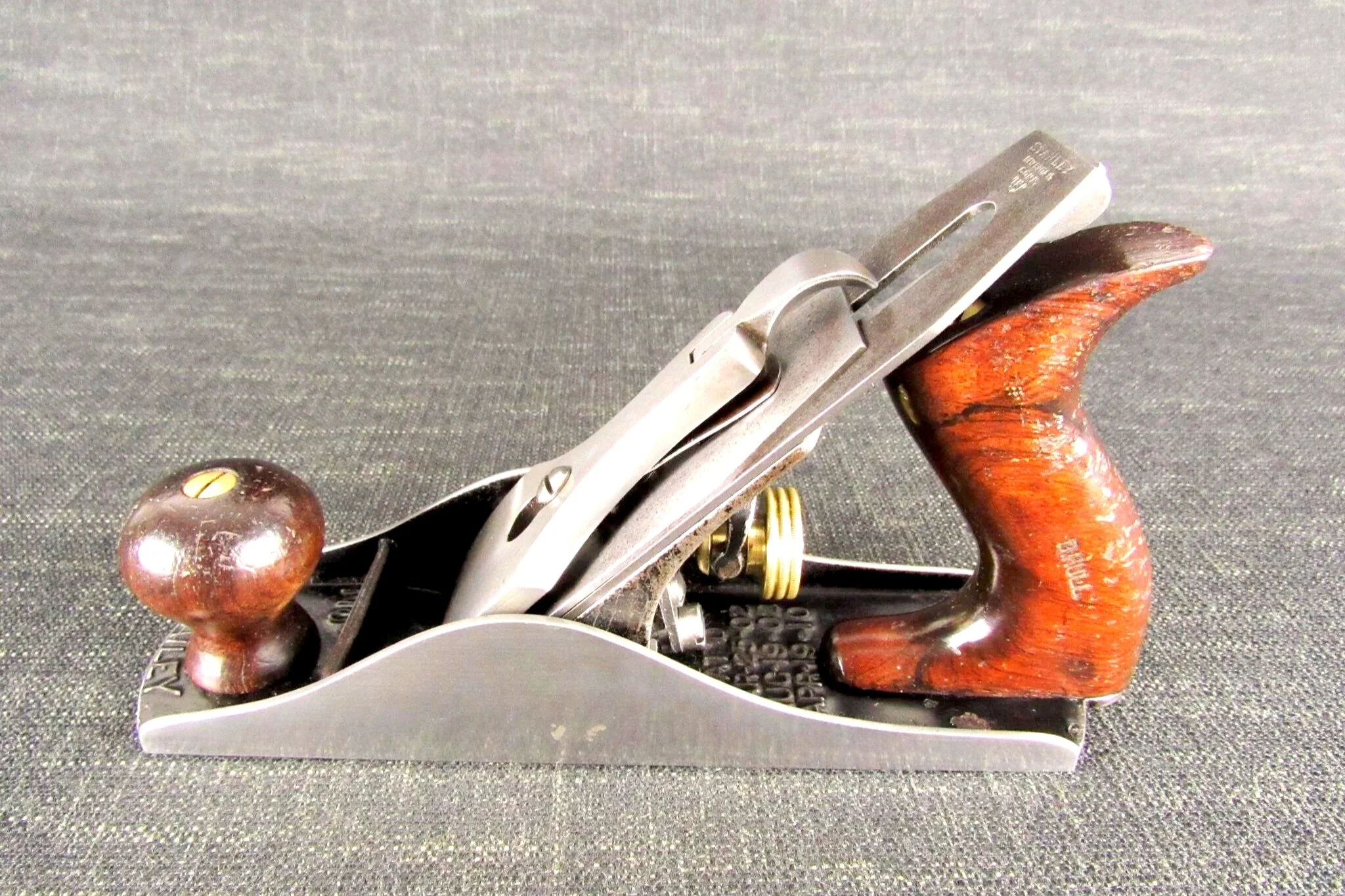
What sets the Type 11 apart begins with its design refinements.
This was the period when Stanley was actively improving both ergonomics and mechanical performance. The most immediately recognisable feature is the tall, elegant front knob, replacing the earlier squat style. This seemingly small change dramatically improved comfort and control, especially during long planing sessions. Combined with the rear tote’s classic, flowing shape, the Type 11 feels balanced in the hand substantial, but not cumbersome.
Mechanically, the plane features the three-patent-date frog, a highly desirable component for enthusiasts. These stamped dates—found behind the frog mark pivotal innovations in adjustability and blade stability. The frog adjustment system on the Type 11 allows for more precise control over the throat opening, giving woodworkers the flexibility to fine-tune the plane for differing grain structures, shaving thicknesses, and finishing requirements. For those who appreciate the nuances of traditional hand-tool work, this adjustability is not merely convenient; it materially affects surface quality and efficiency.

The castings from this era are another highlight. Stanley’s quality control during the Type 11 period was exemplary, resulting in planes that, even today, flatten readily and remain dimensionally stable after more than a century. Many users note that Type 11 castings seem denser and more consistent than those produced in later decades, contributing to a smoother feel in use and reduced chatter under demanding conditions.
Collectors particularly value the original hardware and aesthetic details. The Type 11 often features an orange-heart hardwood tote and knob, crisp rosewood on higher-end examples, and beautifully machined brass components. The trademark “STANLEY” in a notched rectangle on the lever cap, introduced slightly earlier, remains a distinctive visual cue. When these features survive in good condition, the plane not only performs superbly but also stands as an object of craftsmanship and industrial design worthy of display.
In the workshop, however, is where the Type 11 truly shines. When restored and properly sharpened, these planes perform at a level that rivals or exceeds many modern equivalents. Their weight distribution, frog rigidity, and blade support deliver exceptionally fine shavings on a wide range of timbers. Whether smoothing, jointing, or taking delicate final passes before finishing, the Type 11 excels with a confident, predictable feel that inspires trust.
For anyone exploring vintage hand tools, the Stanley Type 11 is more than a collectible—it is a working tool with enduring relevance. Its thoughtful engineering, historical significance, and unmatched hand-feel ensure it remains one of the most respected and sought-after planes in the woodworking world.
